


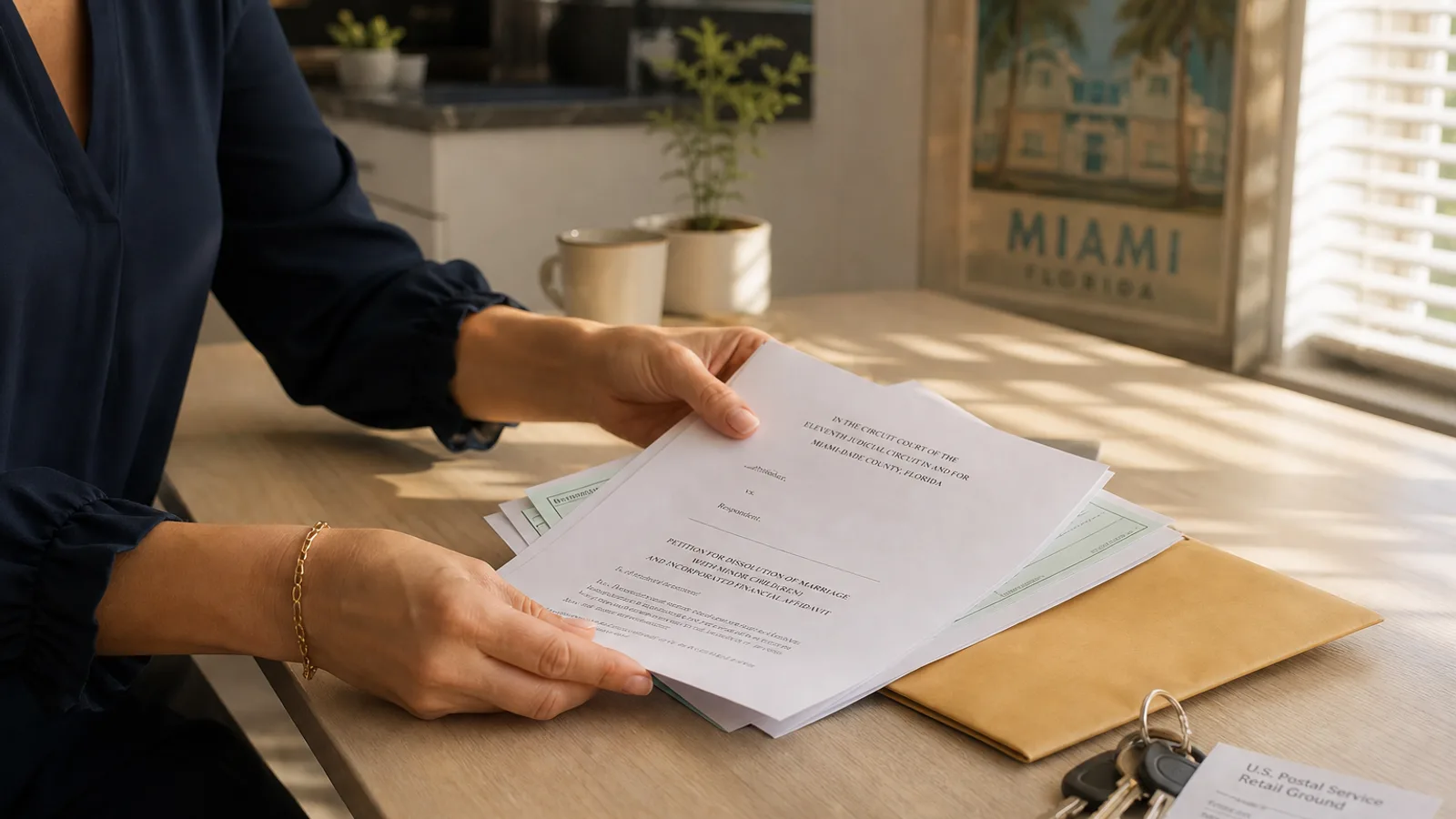
A VAWA self-petition is filed without the abuser’s knowledge, consent or participation (USCIS). From Orlando it goes by mail to a USCIS lockbox, with a mailing address you choose, and there is no filing fee. Information about you and your petition is confidential by law, and USCIS may not deny the petition on evidence that comes only from the abuser (USCIS).
Where an Orlando VAWA Case Goes
A self-petitioner who lives in Florida mails Form I-360 to the USCIS Elgin Lockbox: USCIS, Attn: 1367, P.O. Box 4205, Carol Stream, IL 60197-4205, as of October 2026 (USCIS). The address depends on the state you live in, so check it the week you mail. The fee for a VAWA self-petition is $0 (USCIS fee schedule).
That makes one early decision matter more than most: the address on the form. USCIS lets you give a safe mailing address, and you do not have to live there (USCIS). A friend’s house, a post office box, a shelter or your attorney’s office can serve. Every receipt, request and decision follows that address.
If the petition shows the basic requirements when it is filed, USCIS issues a Notice of Prima Facie Case while it is pending. A self-petitioning spouse or child can use that notice to apply for certain public benefits. A self-petitioning parent does not qualify for them on that basis (USCIS).
The VAWA practice page walks through how a self-petition moves from filing to work permit.
Three Things Older Guides Leave Out
- USCIS may call you to an interview. USCIS interviews some self-petitioners at the field office that covers where they live. The notice goes to your safe address and to your attorney, and the officers who conduct these interviews are trained in the confidentiality rules. Being selected does not mean something is wrong with the case, and missing the interview can lead to a denial (USCIS).
- You must have lived with the abuser during the relationship. Under guidance in force since December 22, 2025, a self-petitioner must have resided with the abuser during the qualifying relationship, and a spouse shows a good-faith marriage with primary evidence of the marriage. The guidance applies to petitions pending or filed on or after that date (USCIS). No minimum length of time is set, and you do not have to be living with the abuser when you file (USCIS Policy Manual).
- The wait is long. Petitions from abused spouses that USCIS decided in fiscal year 2024 had been pending about 38 months on average (USCIS report). At the end of June 2026, 272,911 VAWA self-petitions were pending, and USCIS approved or denied 1,460 in April through June (USCIS data).
What Stays Private Once You File
Who is never told
Your spouse, former spouse, parent, son or daughter signs nothing. The petition belongs to you. DHS can share information about it only in very limited circumstances, and the law behind that protection is 8 U.S.C. 1367 (USCIS).
What lands in a mailbox
Mail is where privacy is usually lost. USCIS notices arrive on paper, in a USCIS envelope. If you still share a home, a mailbox or a mail key with the person who harmed you, put a safe address on the form before the package goes out. If you move later, USCIS has its own change of address procedure for VAWA cases.
The same goes for email and phone. Use an account only you can open, on a device only you control.
Evidence You Can Gather in Orange and Osceola Counties
USCIS considers any credible evidence. The regulation names the kinds that support a claim of abuse: reports and affidavits from police, judges and court officials, medical personnel, school officials, clergy and social workers, protection orders, and photos supported by affidavits (8 CFR 204.2). Around Orlando, that list points to specific offices.
Court and law enforcement records
A petition for an injunction for protection against domestic violence is filed through the clerk of the court, and Florida law has the clerk give the petitioner at least two certified copies of the order (Florida Statutes 741.30). In Orange County that is the Clerk of Courts in downtown Orlando. In Osceola County it is the Clerk of the Circuit Court in Kissimmee.
Incident reports are held by the agency that responded: the Orlando Police Department, the Orange County Sheriff’s Office, the Kissimmee Police Department or the Osceola County Sheriff’s Office. A report with no arrest still records a date, an address and what you told an officer that night.
If the case went to prosecutors, the State Attorney’s Office for the Ninth Judicial Circuit, which covers Orange and Osceola counties, is another place to ask for records.
Records from ordinary life
A self-petition also has to show that you lived with the abuser, and a spouse has to show the marriage was entered in good faith. USCIS lists the records that do that work:
- A lease, deed, mortgage or rental agreement naming you both
- Insurance policies, bank statements or tax filings that show a common address
- School records listing the parent and the address of record
- Medical records
- Birth certificates of children born during the marriage
- Detailed statements from friends and family who know you lived together
For a spouse, start with the primary evidence: the marriage certificate, and proof that any earlier marriage of either spouse ended.
Your own sworn declaration explains the gaps, the moves and the years when you filed nothing anywhere.
The VAWA self-petition evidence checklist lists what to collect before a first meeting.
Who Can Self-Petition Under VAWA
A VAWA self-petition is open to spouses, children and parents. USCIS lists who may file (USCIS):
- The spouse or former spouse of an abusive U.S. citizen or lawful permanent resident
- A spouse whose child was abused by the citizen or resident spouse
- An unmarried child under 21 abused by a citizen or resident parent
- A parent abused by a U.S. citizen son or daughter who is 21 or older
A divorce does not always close the door. A former spouse can file within 2 years of a divorce that was related to the abuse. A child can file after 21 and before 25 by showing that the abuse was the main reason for the delay.
Every self-petitioner also shows good moral character. The VAWA eligibility requirements guide covers the qualifying relationship, the shared residence and that showing.
How to Reach a VAWA Attorney in Orlando Safely
Call from a phone the other person never handles, or borrow one. Write from an email address you opened yourself. Ask us to use a specific number, a specific inbox and a specific time of day, and we will keep to it.
Diane Claxton and the team work in English, Spanish, French and Brazilian Portuguese, from offices in Orlando and Sandy, Utah. Consultations are confidential.
Bring what you have. A partial set of documents is a normal starting point, and part of the work is deciding what else Orange or Osceola County records can supply. Our Orlando immigration attorney page covers the other matters we handle locally, including family petitions, naturalization and asylum.
Related guides
Talk to a Claxton Law immigration attorney
Contact Claxton Law Group for a confidential VAWA consultation in English, Spanish, French or Brazilian Portuguese, and reach us when it is safe for you to do so.